Mastering the Pronation: Serve Velocity secrets
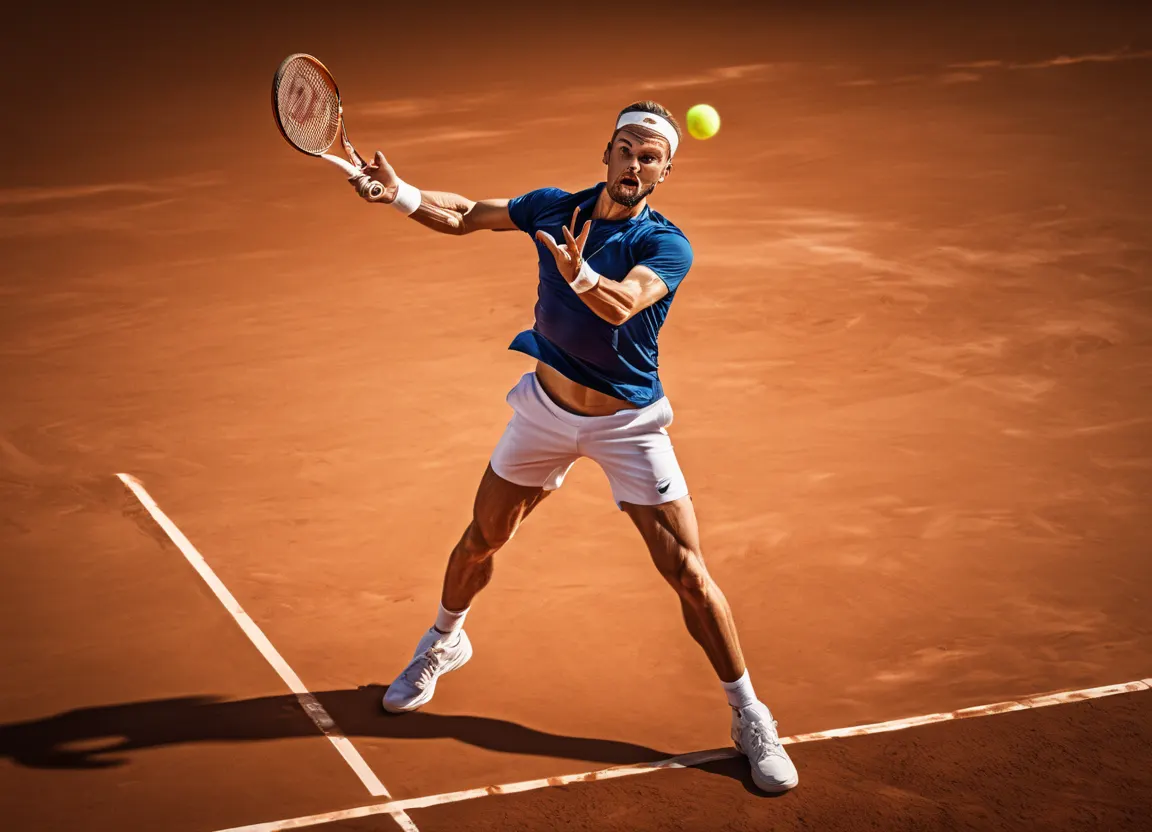
The serve is arguably the most complex stroke in tennis. Many amateur players rely solely on shoulder rotation and muscle strength to add speed, which often leads to rotator cuff strains. In this technical deep dive, we analyze forearm pronation—the biomechanical key to elite serve speed.
What is Forearm Pronation?
Pronation is the natural rotation of the forearm that turns the palm downward or outward. In a flat serve, as the racket ascends to meet the ball, the wrist begins to snap and the forearm rotates. This motion flips the racket face to contact the ball flat, accelerating the frame speed through rotation rather than linear muscle push.
"Pronation acts as the final whip in the kinetic chain. If you restrict this rotation, you lose up to 30% of potential serve speed and overload your elbow ligaments."
Building the Kinetic Chain
A fast serve starts at the feet. Ground reaction forces travel upward through the knees, hips, and chest, funneling into the shoulder. Pronation is the final release point of this energy chain. If your body is tense, or if you use a Western grip (instead of the correct Continental grip), pronation becomes anatomically locked.
Practical Drills
To practice pronation, stand near the fence and swing slowly with a loose wrist, focusing on turning your palm outward after imaginary contact. Gradually increase velocity, ensuring your racket head finishes on the opposite side of your body with a relaxed shoulder follow-through.
